Notes
Field notes
Short, practical writing on building AI-native systems. Filter by tag.
AI tools for Lehigh Valley teams
Compare ChatGPT, Claude, and Microsoft Copilot around your team's real work. Use a practical worksheet to choose tools, train staff, and measure a pilot.
What AI implementation costs a small business
Compare current Om Concepts AI prices, setup and training scope, usage costs, and quote questions for small businesses throughout the Lehigh Valley.
Test an AI receptionist before customer calls
Use a twelve-case AI receptionist test sheet to check intake, corrections, handoffs, booking failures, and customer-call readiness before a live trial.
Choosing an AI consultant in the Lehigh Valley
Use eight practical questions to compare Lehigh Valley AI consultants on evidence, deliverables, ownership, testing, support, and ongoing business costs.

Getting More from Codex
Put Codex to work with lasting context, reusable workflows, and clear review steps. Explore practical ways to organize, delegate, and finish work.

Before you connect an AI agent
A practical first-use guide for getting real value from personal AI agents while building stronger digital-hygiene habits one step at a time.
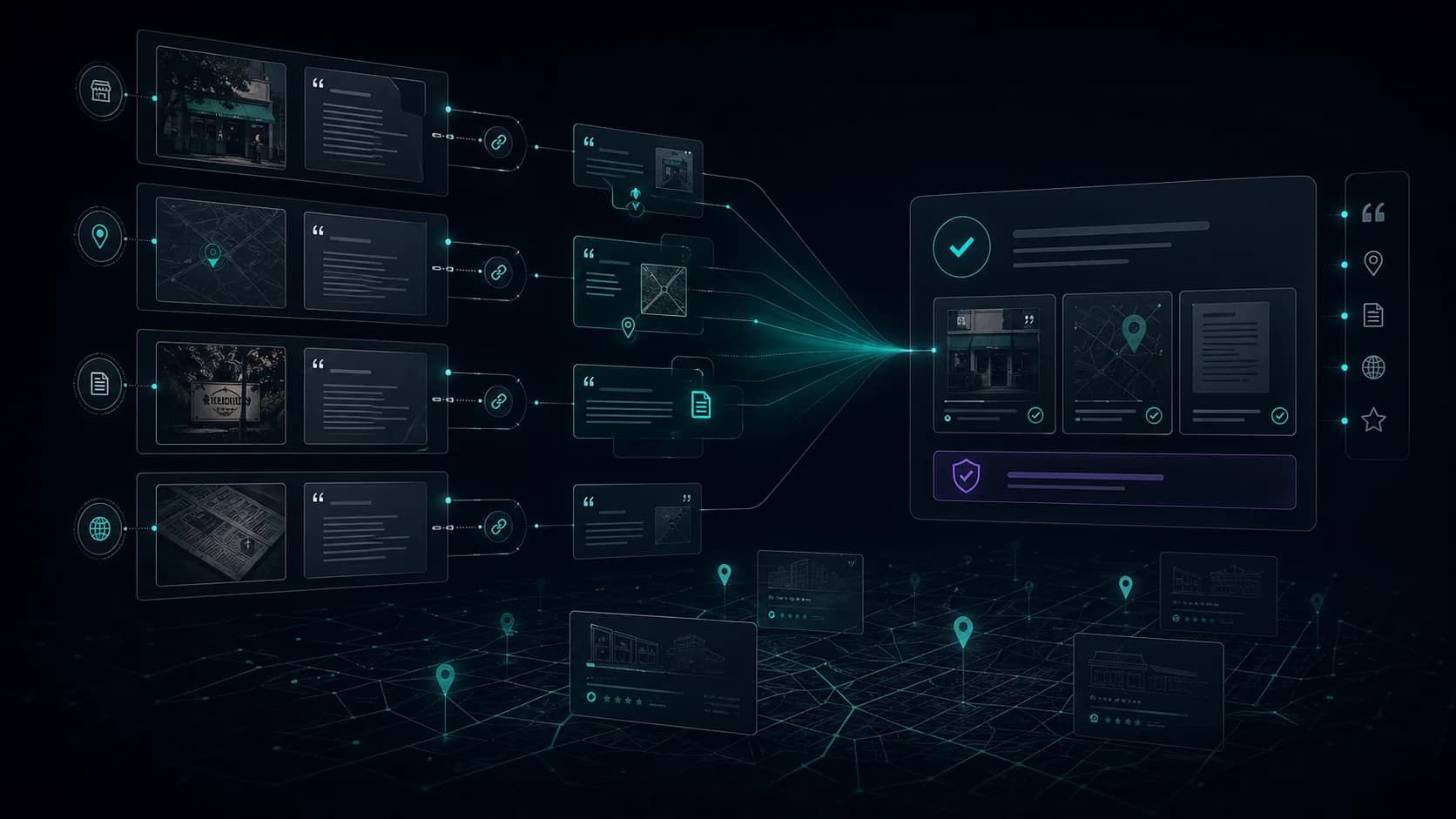
AI search is a citation problem
AI Overviews and AI Mode changed how buyers research. The sites that win are the ones an answer engine can safely cite. Here is the checklist.
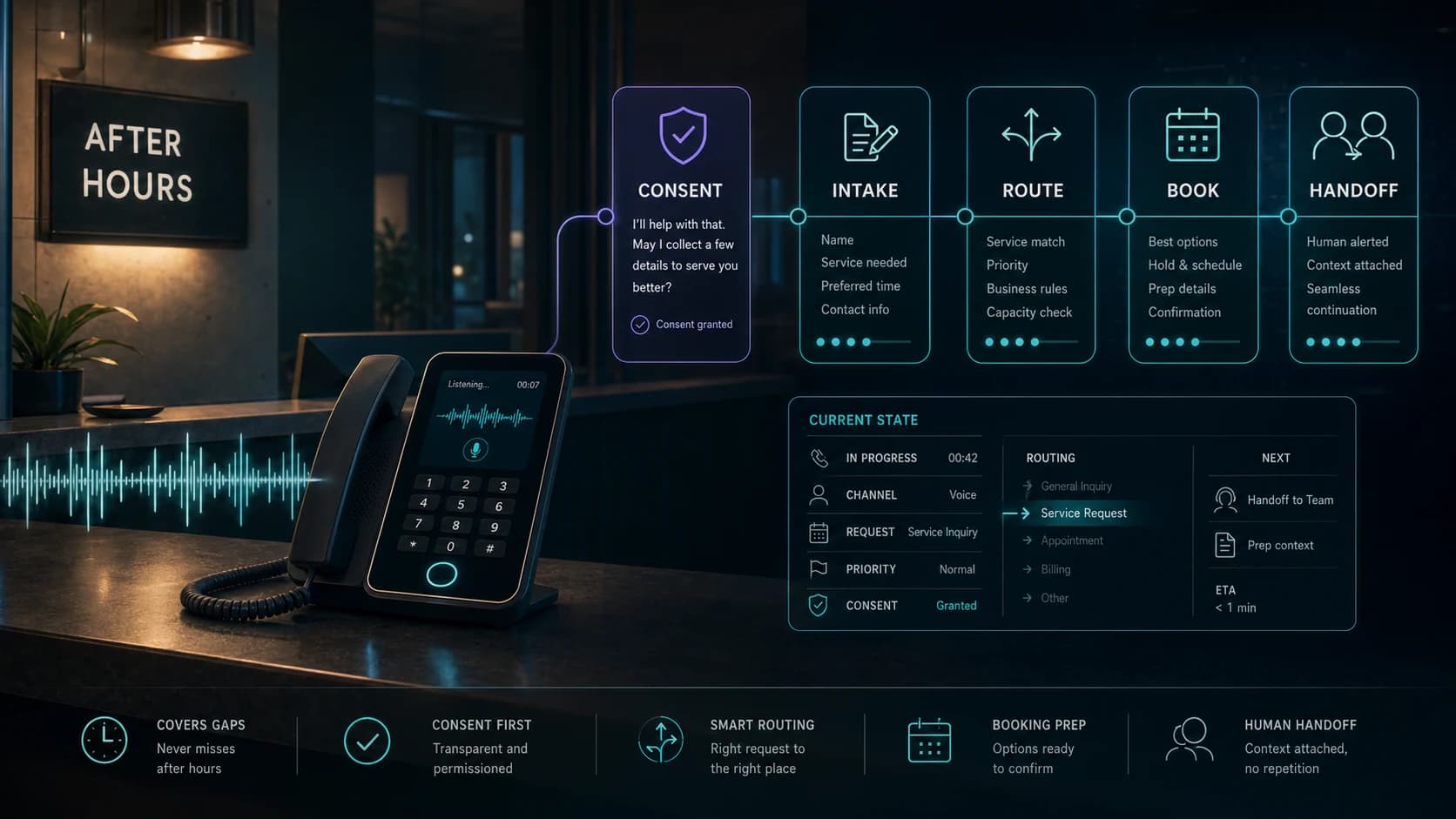
Voice agents are becoming front-desk systems
Real-time multimodal models are moving voice agents beyond scripts. The business case is intake, routing, and follow-up with clear consent.

Measure AI referrals like a channel
45% of consumers now ask AI tools for local business recommendations. How to see that traffic in analytics, your lead records, and intake questions.

Write the one-page AI policy
Most small businesses using AI have no written rules. A one-page policy that covers tools, data, approvals, and receipts without slowing anyone down.

Plan for the model going away
Claude Fable 5 was offline from June 12 to July 1. What model outages, deprecations, and price changes mean for workflows pinned to one model.

Computer-use agents need production wrappers
Browser and shell agents are ready for bounded work when scopes, screenshots, approval points, budgets, and receipts are built into the wrapper.
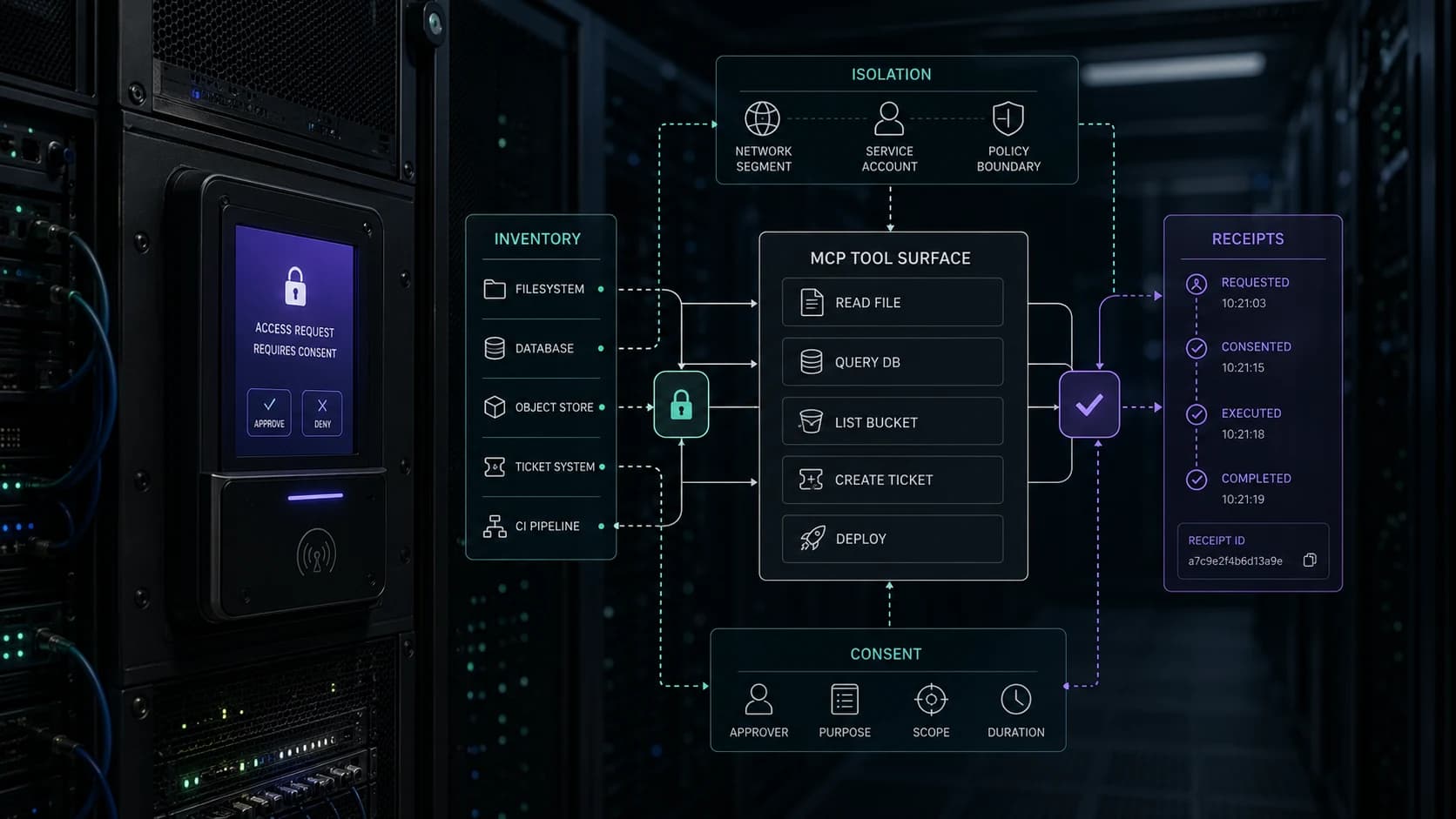
MCP needs an operating model
MCP servers need inventory, scoped credentials, consent rules, logs, and receipts because tool access becomes a business surface fast.

Agents only pay when workflows change
AI adoption pays when a team changes the workflow: pick one clean input, define the output, measure accepted work, and keep review in the loop.

Model vs harness vs environment
A debugging frame for agent failures: separate model judgment from harness rules and environment issues before paying for a stronger route.

Why we built our own agent harness
A practical look at the control layer behind Om Concepts agents: client sandboxes, tool rules, budget gates, receipts, and where vendor tools still fit.

Receipts prove each run
Agent receipts show model routes, prompt hashes, tool calls, token costs, review state, and what clients can inspect without exposing private work.

Service pages that help buyers decide
A service-page structure for showing who the offer fits, what gets shipped, what shapes price, which proof matters, and what to do next.

Where small businesses lose leads
A lead handoff map for small teams: match ad promises, capture useful fields, set reply ownership, and automate only after the loop works.

Local SEO operating cadence
A 90-day local SEO cadence for listings, reviews, useful content, technical hygiene, and tracking whether visibility becomes pipeline.