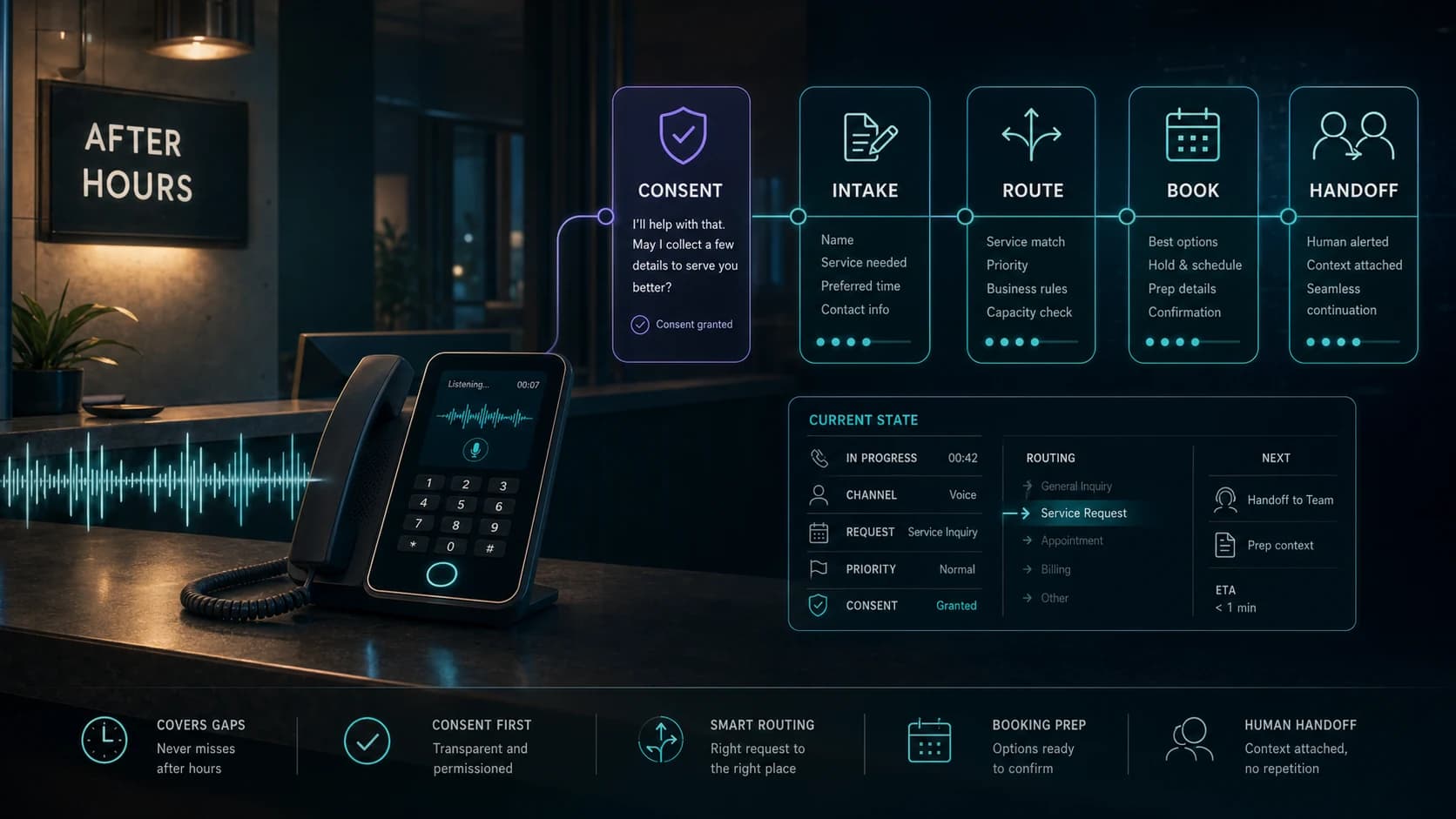
In small teams, the leak usually shows up at the handoff. The ad worked. The visitor clicked. The form submitted. Then nobody owned the next step clearly enough.
Lead systems do not need to be complicated before they are useful. Start by naming the handoffs, assigning an owner, and measuring response time. Automate after the manual version works.
The handoff map
This map is simple on purpose. If the owner and SLA are unclear, a smarter tool will only move the confusion faster.
Ad to landing page
Ads promise a specific outcome. Landing pages need to continue that promise in the first screen.
If the ad says "emergency pool opening," the page should not open with a general company story. It should confirm the service, location, response expectation, and next action. Match the ad language to the H1, then make the first CTA the action the ad promised.
The fix is boring. That is why it works.
Form to inbox
A form submission should never land as a mystery message. It should create a record with source, service, urgency, and owner.
At minimum, the thank-you page should tell the visitor what happens next. "We received it" is weaker than "Alex will review this and reply by the next business morning." If the business cannot meet that promise, choose a promise it can meet.
That promise becomes the SLA.
Inbox to first reply
Start with a two-line owner reply. After it works for a month, let an agent draft it and keep the owner in approval.
The template should be short enough to send from a phone. Once the owner actually uses it, automation has something real to copy.
When to add an agent
Add an agent when the manual loop is stable.
- The form captures the right fields.
- The owner knows which leads matter.
- The first reply has a repeatable shape.
- The CRM or spreadsheet has a place for the result.
- A human still approves outbound messages.
The first agent should draft, route, and log. It should not pretend to close the sale.
Run this next
Pick one current lead source and fill out the handoff map before adding automation. If the owner, SLA, or escalation path is blank, the workflow is not ready yet.